Plant reliability engineers are driven by one central metric: surprise-free runtime. For gas and steam turbines, any forced outage triggered by even a small failure causes subsequent ripple effects. Visit this site for more information.
Uncertainty is eliminated with a scheduled inspection that is well-defined. Inspections show how wear is trending, confirm repairs, and will provide planners crucial time to scope out the work is if a small defect becomes a big failure.
Why Downtime Happens in Turbines
The event of an unplanned outage is very uncommon as the result of one catastrophic event that abruptly and dramatically causes turbine components to fail. Downtime events build over time. For steam turbines with multiple paths, deposits build over time that increase blade loading and stall margins to the point that a failure event occurs.
For gas turbines, thermal cycling, hot streaks, and repeated load and stagnant flow conditions occur that cause coatings and blade roots to experience stress. Seals thermally age and harden and begin to leak. Bearings lose hydrodynamic film strength, and the repeated starting event process allows bolting to relax. Good programs combine condition monitoring with targeted visual inspection to better identify and monitor change.
Vibration analysis is very useful for identifying rubbing, misalignment, looseness, and torque-once parts are disassembled. The use of lubrication health records provides assurances of historical wear metals typical of bearing risk and turning-gear risk. Once engineers correlate data sets, inspections, and performance criteria, patterns will easily emerge to make decisions related to running time extensions, load trims, or planned stops that have negligible impact.
Early Detection of Issues
Detecting problems early gives an engineer time to make decisions on when to schedule the work, what work will be scoped, and what parts to have available, versus a complete failure determines everything for the plant. Early signals are often small delta temperatures, lagging trend lines, and/or minor events of efficiency loss. It takes a repeatable field playbook and common thresholds across the team to turn those clues into actions.
- Use borescope inspection (https://www.sciencedirect.com/topics/engineering/borescope) to access buckets, nozzle throats, and seal lands without a complete teardown; overlay images against last outage baselines.
- Trend clear KPIs: heat rate, exhaust spread, lube oil particulates, and start counts, along with alarm histories, to begin building context for each unit.
- Tie findings to risk ranks so planners can stage spares, line up contractors, and bundle work during a short, controlled outage.
In-Situ Inspections Explained
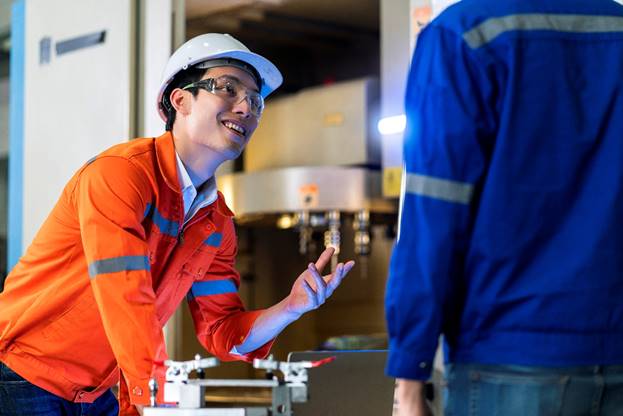
In-situ means to inspect the unit in-place using portable tools and access ports — removing the need for long teardowns. For many findings — seal wear, changing burn patterns, lift of coatings — this methodology is fast, precise, and low-risk. Teams, as much as possible, use nondestructive methods to see through the surface while the components remain in position, reducing labor time and maintaining quality.
Some techniques include eddy current testing of conductive parts to look for cracks, pits, and fretting at blade roots and dovetail areas. Dye penetrant or phased ultrasound may be utilized to confirm conditions at selected features, as access points permit. As a nondestructive form of evaluation, results can be trended unit over unit and cycle over cycle. On gas machines, these techniques were paired with a focused hot gas path which either confirms distress is limited to the local piece, or distress lingers at some systemic level, and whether pre-scope or not.
Maintenance vs. Repair Costs
Budget swings are timing based. A planned maintenance task replaces wear items at a known timeframe; an unplanned repair replaces failed parts and whatever was damaged on the way out. Engineering teams minimize that swing by providing actionable inspection information, while balancing availability risk, to select the less expensive path. Consistent business rules, such as what to run, what to repair and what to defer, defines the process in a consistent manner across fleets.
- Planned work decreases crane time, rush freight and premium labor costs; it also saves collateral damage to adjacent blades, seals, or casings.
- Forced repairs often require additional nondestructive evaluations, line boring, rotor balancing, and/or just more outage days. Everyone knows the lead time of parts and expediting fees adds up quickly over a timeframe.
- As part of closing the loop, using inspection evidence to then drive root cause is a fast way to prevent repeat events and focus the next outage on real drivers.
Keeping Turbines Online Longer
The best-performing programs all treat inspections as an extension of operations and not just outage work. They define crisp timings, normalizing findings and linking each document/note to a process-based decision: Continue Run, De-rate, or Get Accordingly Scheduled. And with each passage of time, engineering crews minimize uncertainty, emergency work, and stabilizing availability commitments, allowing the turbines to run their margins longer while providing continuous outputs between majors. Over time, this general discipline removes “surprise unexpected downtime,” which was eventually just a mishap in a loop, adding it to a notable rarity.