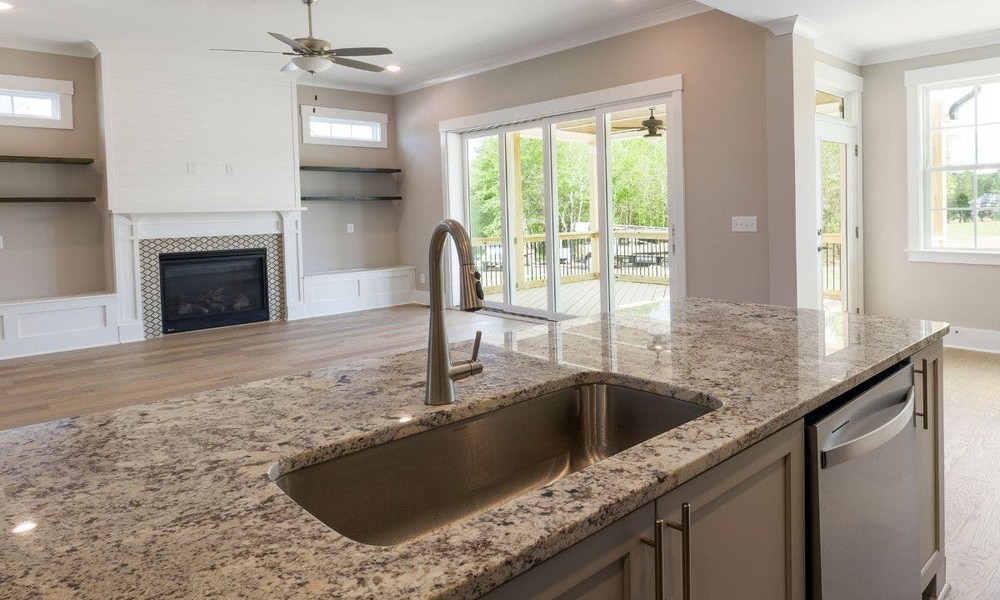

There’s a moment most homeowners recognize. You’ve freshened up the kitchen – maybe new cabinet hardware, a coat of paint, some updated lighting – and the room is almost there. Almost. Then your eyes land on the countertops, and everything else suddenly looks better than they do.
Worn, scratched, stained, or just hopelessly dated countertops have a way of anchoring a kitchen to its worst era. And the standard advice – replace them – comes with a price tag that can stop a perfectly reasonable renovation in its tracks. New stone or quartz countertops for an average kitchen can run several thousand dollars before installation. For a larger kitchen, or one with an island, the costs climb quickly.
What’s worth knowing is that replacement isn’t the only path to countertops that look genuinely good. For surfaces that are structurally sound but cosmetically worn, professional countertop resurfacing delivers a result that transforms the kitchen – at a cost that makes the project realistic for most homeowners. Here’s what that looks like and when it makes sense.
What Happens to Countertops Over Time
Kitchen countertops endure more daily wear than almost any other surface in the home. Heat, moisture, cutting, impact, acidic foods, and years of cleaning with household products all take a toll – and the effects are cumulative in ways that aren’t always obvious until they’ve added up to something that can’t be ignored.
Scratches and surface dullness. Laminate and solid surface countertops are particularly vulnerable to surface scratching. Over time the finish loses its smoothness and consistency, and the surface starts to look hazy and worn regardless of how clean it is.
Staining. Coffee, wine, tomato sauce, and cooking oils all leave their mark on countertops whose surface coatings have degraded. Once staining penetrates a compromised surface, standard cleaning products can’t reverse it.
Chips and edge damage. The edges and corners of countertops take the most impact over time. Chipped edges not only look worn but expose the substrate beneath to moisture, which can cause further deterioration if left unaddressed.
Outdated color or pattern. Countertop trends have shifted considerably over the past two to three decades. Laminate in outdated patterns, solid surfaces in builder-grade beige, and tile countertops with heavy grout lines are all common in homes that haven’t been updated recently – and all of them communicate “old kitchen” to anyone who walks in.
All of these are surface conditions. The countertop itself – its substrate, its support, its attachment – is typically sound. What has failed is the visible layer, and that’s the layer that professional resurfacing addresses.
What Professional Countertop Resurfacing Involves
Professional countertop resurfacing is a multi-step process that applies a new, durable coating over existing countertop surfaces – transforming their appearance without tearing them out. It works on laminate, tile, cultured marble, and solid surface materials, which covers the majority of countertops in residential kitchens and bathrooms.
The process follows a consistent and exacting sequence:
Thorough cleaning and degreasing. Kitchen surfaces accumulate grease, residue, and product buildup that has to be fully removed before any preparation begins. This step is more involved in a kitchen environment than almost anywhere else in the home.
Chip and edge repair. Damaged edges, chips, and surface irregularities are filled, shaped, and smoothed. This repair work is what produces a flawless finished surface – the coating alone won’t hide underlying damage.
Surface preparation. The existing surface is abraded or chemically etched to create a reliable mechanical bond for the new coating. Without this step, even premium coatings can fail prematurely.
Bonding primer. A primer appropriate for the specific countertop material is applied to bridge between the prepared substrate and the topcoat.
Topcoat application. A professional-grade coating is applied in even, controlled layers, producing a smooth, sealed, and visually consistent finish. Color choice is typically available, with white, off-white, and neutral tones being the most popular.
Curing. The finish requires time to cure before the countertops return to regular use. Most contractors recommend 24 to 48 hours before light use, with full cure taking a few days beyond that.
The result is a countertop surface that is smooth, sealed, and visually refreshed. Stains that resisted years of cleaning are gone. The scratched, dull surface is replaced with a consistent finish. Chips and edge damage are repaired. And the kitchen looks meaningfully updated as a result.
The Case for Resurfacing in a Home You Love
For homeowners who have invested care and personality into their living spaces – who have painted cabinets, sourced vintage hardware, chosen textiles deliberately, and built a kitchen that feels genuinely theirs – countertop resurfacing fits naturally into that sensibility.
It’s a form of restoration rather than replacement. Rather than pulling out what’s there and substituting something generic, resurfacing takes what already exists in the home and brings it back to its best condition. That approach tends to produce kitchens that feel coherent and considered rather than renovated-by-catalog.
It also keeps the budget available for the things that make a kitchen feel personal. New countertops can consume most of a modest renovation budget on their own, leaving nothing for the open shelving, the vintage finds at a salvage yard, or the farmhouse sink that would really make the space sing. Resurfacing the existing countertops and redirecting the savings toward those details often produces a kitchen that looks more individual – and more alive – than new stone alone would have.
Bathroom Countertops: The Same Logic Applies
Everything that makes countertop resurfacing compelling in the kitchen applies equally in the bathroom. Vanity countertops – particularly cultured marble, which was ubiquitous in homes built through the 1980s and 1990s – develop the same kinds of surface problems over time: yellowing, surface crazing, staining, and a general dullness that makes even a clean bathroom look dated.
Resurfacing a cultured marble vanity top is one of the fastest and most cost-effective bathroom upgrades available. Combined with bathtub and tile refinishing in the same visit, it contributes to a bathroom that looks comprehensively updated – not a space where the vanity countertop was addressed while everything else was left as-is.
For homeowners tackling both the kitchen and bathroom, working with a contractor who handles both surfaces consolidates scheduling and ensures consistent color and finish standards across the whole project.
When Resurfacing Makes Sense and When It Doesn’t
Professional resurfacing is not a solution for every countertop situation, and a reputable contractor will be straightforward about the cases where it’s not appropriate.
Good candidates. Laminate countertops that are scratched, dull, or outdated in color but still properly attached and supported. Solid surface countertops with surface wear and staining. Tile countertops where the tile itself is intact but the look is dated or the grout has become impossible to keep clean. Cultured marble vanity tops with surface yellowing, crazing, or staining.
Not suitable for resurfacing. Natural stone countertops – granite, marble, quartzite – are not resurfacing candidates in the way described here. They have their own restoration options but respond differently to coating processes. Countertops with significant water damage, warping, or substrate deterioration need structural repair before any surface treatment. And countertops that need to be reconfigured – different dimensions, new cutouts, layout changes – require replacement regardless of surface condition.
The starting point is always an honest assessment from a qualified contractor who can look at the actual surface and give you a direct answer about whether resurfacing is appropriate and what the result will look like.
Getting the Most From a Resurfaced Countertop
Resurfaced countertops are durable, but they benefit from consistent care habits that protect the new finish over time.
Avoid abrasive cleaners and pads. Scouring powders, steel wool, and abrasive sponges will scratch the finish. Mild liquid soap and a soft cloth are all that’s needed for daily cleaning.
Use trivets and cutting boards. Direct heat from pots and pans can damage any countertop coating. Always use a trivet or hot pad. Use a cutting board rather than cutting directly on the surface.
Wipe spills promptly. Although resurfaced countertops are sealed and non-porous, promptly wiping spills – particularly acidic ones like citrus juice or vinegar – is good practice that extends the life of any finish.
Address chips early. If a chip develops, contact your contractor for a touch-up before moisture has a chance to work beneath the coating. Small repairs are simple when caught early.
With these habits in place, a professionally resurfaced countertop will maintain its appearance for years – often five to ten or more – before the surface benefits from another treatment.
What to Look for in a Contractor
The quality of a resurfacing job depends almost entirely on the skill of the contractor and the products they use. This is specialized work, and the difference between a well-executed job and a poor one is visible within months.
When evaluating contractors, ask about their specific experience with countertop resurfacing – it requires different products and preparation than bathtub or tile work, and not every surface refinishing company handles all three with equal competence. Ask what coating system they use, whether it’s formulated for kitchen environments, and what heat resistance the finish offers. Ask what their warranty covers and for how long.
Before-and-after photos from actual completed countertop jobs, like the ones shown on the website of Coastal Resurfacing in the Space Coast area of Florida, are the most reliable indicator of quality. Ask to see them, and look specifically at edge treatment and color consistency – these are the areas that reveal the difference between careful work and rushed work.
A Kitchen Worth Coming Home To
The kitchens and bathrooms that feel most alive are the ones where every element is at its best – where nothing is working against the overall impression of care and quality. Countertops that look worn or dated undermine that impression, no matter what else has been done to the space.
Resurfacing offers a path to countertops that genuinely look good, at a cost that keeps the renovation budget available for everything else that makes a home feel personal. It’s restoration rather than replacement – and for homeowners who care about their spaces, that distinction tends to resonate.
If your countertops have been the item holding back a kitchen or bathroom you otherwise love, the fix may be closer – and more affordable – than you’ve been assuming.