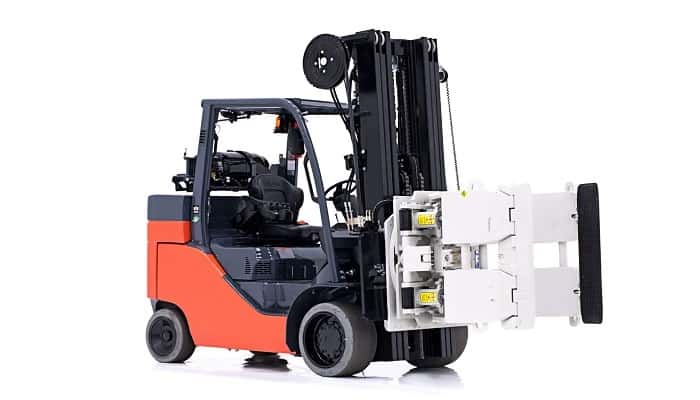

If you need to lift long, bulky, or awkwardly shaped items, you may benefit from a jib attachment to your forklift. Any regular forklift can be transformed into a more versatile lifting machine with the help of this device. But while these forklift attachments increase efficiency, they also require extra care. Mistakes — and the most frequent ones at that — can easily result in an unsafe or damaged situation.
If you’re looking for smoother work and fewer workplace accidents, here ‘s what to avoid. It’s a big, heavy investment with a big impact, and with a very small margin of room for error. It’s a situation that’s prone to errors even when the load is partially suspended. Being vigilant and going with best practices can save time, money, and lives.
Mistakes To Avoid When Using a Forklift Jib Attachment
Lifting More Than You Should
This is the top mistake. Anytime you add a jib to your forklift, you are changing the load center, and will in turn, be reducing the overall lifting capacity. When it comes to shaking the drum, you don’t waste any time.
Always make sure to consult the load chart that was provided by the manufacturer at the beginning of the process, and this applies to both the jib and the forklift. Know your limits — guessing can end up costing you more than just the time it saves.
Ignoring Load Balance
Even if the weight is below the limit, it still matters how the truck is loaded.
An unbalanced load — particularly one that is off-centered or swinging — moves the center of gravity of the forklift. That is a fast track to instability.
- Keep the load centered.
- Use additional straps if needed.
- Do not attempt to lift any loose or shifting materials.
Sloppy Rigging Practices
You can have an excellent jib and a strong forklift, but if your chains, hooks, or slings aren’t strong, then it is a moot point.
Failures related to rigging are often the result of using damaged or incompatible gear — or not properly securing things.
Always ensure that everything is connected correctly and that all parts are in good condition for lifting.
Letting the Untrained Operate
This one’s non-negotiable. Even the most experienced forklift drivers struggle with jib attachments if they are not trained effectively. The dynamics are different — turning, visibility, stopping, everything feels different.
Ensure your staff knows the appropriate and safe use of forklift attachments, especially in congestion inside warehouse spaces, narrow aisles, or outdoor locations.
Skipping the Pre-Use Inspection
Before beginning each shift, check the jib attachment for any signs of apparent wear, such as cracked or bent pieces.
Once you have installed your rack ensure the locking pins and safety latches are engaged. If anything appears out of place, stop and report it. If you’re using damaged gear, it’s not just dangerous — it’s irresponsible.
Misjudging Space and Clearance
The fork lift with the jib takes up extra space. Consequently, this results in more tight bends and a greater number of inanimate things with which to crash.
In squeezed aisles or beneath overhead structures, they can also cause accidents if you aren’t paying attention.
If you’re not sure you have clearance, or if it is tight, bring in a spotter. Better to be led than to plow into a rack or the ceiling beam.
Disregarding Attachment-Specific Guidelines
Each jib attachment is different. Treating them all the same is a recipe for errors.
Be sure that your operators follow guidelines for forklift jib attachments, not just general forklift rules. That’s how you can keep it compliant and reduce unjustified risks.
Final Word
It is not just about equipment: it’s about habits.
From the way you handle loads to regular inspections and ongoing training, these measures can seem small but are essential.
Steering clear of these common mistakes with forklift jib attachments will help ensure the safety of your crew, the shape of your gear, and that costly interruptions don’t interrupt or shut down operations.
Do you want smoother lifts and safer jobs? Begin by abandoning these errors — then outsmart your opponents at every opportunity.