
Two houses a mile apart in Oakland County can install the same 50 gallon heater on the same afternoon and get very different futures out of it. One draws treated Lake Huron water through the township main, the other pulls from a private well behind the garage, and that difference quietly decides how the tank wears, what it smells like after a few years, and when it finally gives out. For anyone sorting out water heaters in Commerce, it helps to know that local plumbers like Scott Brendel back their work with a one year guarantee, take emergency calls when a tank lets go on a holiday weekend, and bring about 25 years of experience with both conventional tanks and tankless units vented through the wall.
Two Sources Under One Township
Commerce Township’s municipal system doesn’t pump its own groundwater. According to the township’s annual drinking water quality report, that water comes from the Great Lakes Water Authority, treated at its Lake Huron plant and piped in. It arrives moderately hard, consistent in chemistry, and largely free of sand and iron.
Plenty of homes around the lakes never connected to that system, though. Older lake neighborhoods and properties on larger lots often still rely on private wells, and southern Michigan groundwater tends to be hard, sometimes carrying iron, sediment, or sulfur. A water heater doesn’t care where a house sits on a map. It only reacts to what comes through the cold inlet, and those two inlets tell very different stories.
Before the First Shower
The choices made on installation day matter more than most homeowners realize, and they shift depending on the source.
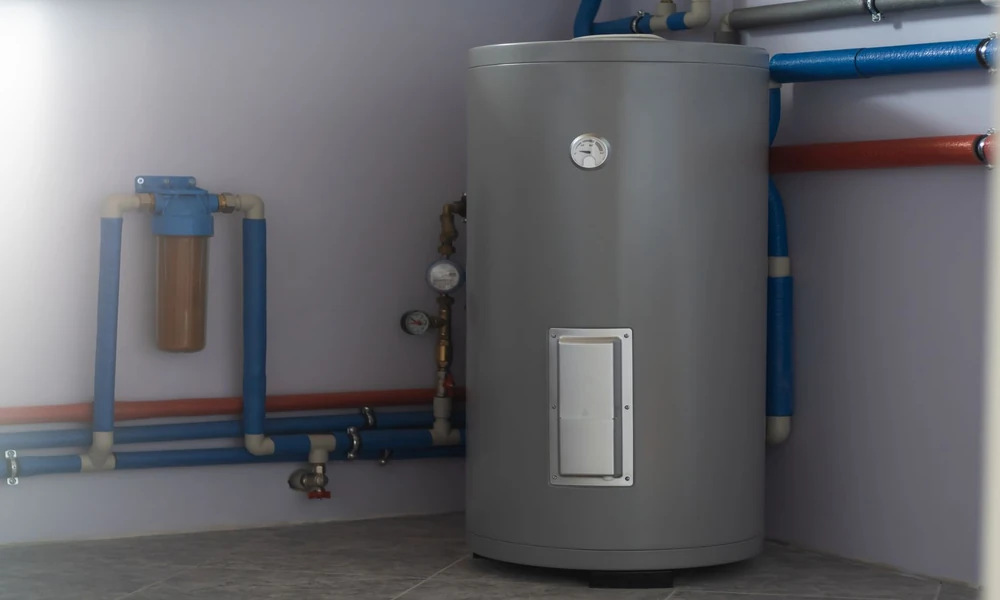
On city water, the house usually has a pressure reducing valve or a check valve at the meter. That creates a closed system, so when water heats and expands, it has nowhere to go. A thermal expansion tank mounted near the heater absorbs that pressure, and without one the relief valve tends to drip and the tank takes extra strain every heating cycle.
On a well, the pressure tank already cushions some expansion, but the bigger concern is what the water carries. A sediment filter ahead of the heater catches sand before it settles in the tank. If the water is hard enough to leave white crust on faucets, a softener protects the heater too, though it brings a tradeoff discussed further down.
On both systems, setting the thermostat around 120 degrees keeps scald risk low and slows mineral buildup, since scale forms faster at higher temperatures.
The Early Years When Nothing Seems Wrong
For the first three or four years, both heaters usually behave. That calm period is when most damage quietly starts.
On well water, minerals drop out of solution every time the burner fires. Calcium and magnesium settle on the tank floor as a layer that insulates water from the flame. The burner runs longer, the bottom of the tank runs hotter, and the steel lining ages faster. A yearly drain and flush clears most of it, and homeowners on hard wells are often surprised by the gravel-like grit that pours out of the drain valve.
City water heaters build sediment too, just more slowly. Flushing every year or two keeps them in good shape, and testing the temperature and pressure relief valve once a year confirms the most important safety device on the tank still opens.
Midlife and the Rod Nobody Checks
Somewhere between years four and seven, attention turns to the anode rod. It’s a metal rod screwed into the top of the tank that corrodes on purpose so the steel walls don’t. Once it’s eaten down to bare wire, the tank starts corroding instead.
Here the water source changes the timeline again. Softened well water is more aggressive toward anodes, so a heater protected from scale by a softener can burn through its rod faster than expected. Well water carrying sulfur can react with a standard magnesium anode and produce that rotten egg smell in hot water only. Swapping to an aluminum zinc rod or a powered anode usually solves it.
City water anodes generally last longer, but they don’t last forever. Pulling and inspecting the rod around year five, and replacing it if more than half is gone, can stretch a tank’s life by several years.
What Your Hot Water Is Telling You
Warning signs often point straight back to the water source, which makes them easier to read once you know what to look for.
- Rusty water from hot taps only usually means the anode is spent or the tank lining is failing. If cold taps run rusty too on a well, iron in the water is the more likely cause.
- A sulfur smell from hot water alone suggests an anode reaction, common on wells and rare on city water.
- Popping or rumbling is steam escaping through a sediment layer, louder and earlier on hard well water.
- Lukewarm water that runs out fast can mean sediment has filled the bottom of the tank, or on gas units a failing thermocouple or burner issue.
- Moisture under the tank deserves a call right away, since a seep can become a flood with little notice.
The Season When Lake Water Turns Cold
One difference rarely gets mentioned. Well water stays close to the same temperature all year, often around 50 degrees in this part of Michigan. Lake Huron water swings with the seasons, arriving noticeably warmer in late summer and much colder by February.
That means a heater on city water works hardest in deep winter, needing to raise incoming water by far more degrees to reach the same shower temperature. Families who feel they run out of hot water only in winter aren’t imagining it. The tank holds the same gallons, but each gallon starts colder, and recovery takes longer. Sizing a replacement with January in mind, rather than an average month, avoids that frustration. Tankless units feel the swing even more, since their flow rate drops as the temperature rise climbs.
Lake Cottages That Became Full Time Homes
Many properties around the township’s lakes started as seasonal cottages and were winterized and expanded over decades. Their water heaters sometimes live in tight utility closets or crawl spaces, sized at 30 gallons for weekend use. When a household moves in full time, that tank struggles, and its location can make access for flushing or replacement awkward.
Upgrading in these homes often means rethinking placement, venting, and in crawl spaces, freeze protection for the lines running to and from the heater. A wall hung tankless unit sometimes solves the space problem, provided the gas supply and venting can support it.
Knowing When the End Has Arrived
A well cared for tank on city water commonly reaches 10 to 12 years, sometimes more. On hard well water without softening or regular flushing, eight years can be a good run. Age alone isn’t proof of failure, but a tank past its expected life showing rust at the fittings, a dripping relief valve, or water at the base is giving fair notice.
Replacing on your own schedule, before a leak forces the decision, gives you time to choose the right size, add the expansion tank or sediment filter the old installation may have lacked, and match the new heater to the water that actually flows into your home. That last part is what separates a heater that simply works from one that lasts.
Well Water and City Water Age a Water Heater Differently