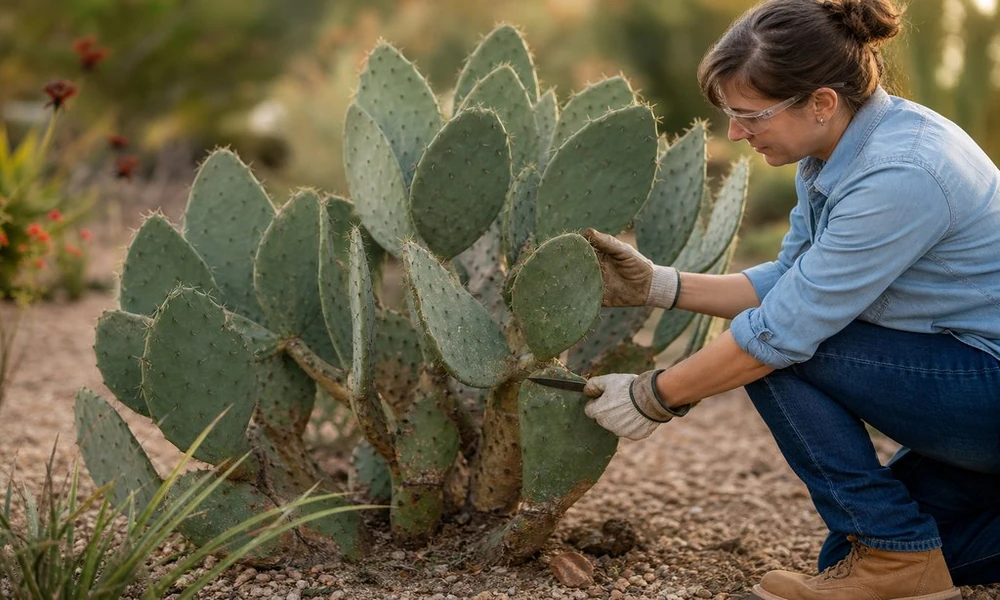

Cactus in a landscaped area
Removing a cactus isn’t as simple as removing other shrubs in your landscape. Its thorns can easily puncture your skin and leave pieces behind, its body parts can be heavier than expected, and some types of cactuses can sprout new growth from parts that have been removed and discarded. So to avoid hurting yourself, damaging nearby objects and structures, and violating your community’s landscaping regulations, it’s important to follow the proper steps for cactus removal.
Assess the Cactus and Plan the Job
Inspect the Cactus
The first step in removing any cactus, whether it’s a small one in a pot or a huge specimen with multiple limbs and an extensive root system, is to inspect it. Make note of its height and thickness and consider the weight of its different parts.
Also pay attention to any objects and structures near the cactus (fences, buildings, sidewalks and other walkways, windows, utility boxes, irrigation systems, etc.) as well as the cactus’s overall orientation and direction of growth. If you’ll be removing any sizeable cactuses, you may also want to research whether or not there are any local ordinances that require a permit to remove native or protected cacti or impose other restrictions on cactus removal and disposal.
Plan Ahead
Use the information you gathered during your cactus inspection to develop a game plan. Figure out how you’ll break the plant into manageable chunks, which section to remove first, and how you’ll safely control its descent to the ground. The last thing you want is for a particularly heavy arm to topple onto something you can’t afford to have damaged!
Don’t forget to plan how you’ll dispose of the cactus, and review Maven Tree Services’ step-by-step guide for the removal sequence before finalizing your approach, especially if local regulations govern the disposal of cactus parts.
Suit Up
When removing a cactus, even one that appears to be on the softer side, it’s best to take every safety precaution. Arm yourself with:
- Heavy work gloves (not lightweight gardening gloves) that cover your entire hand and extend up past your wrist
- Long sleeves
- Long pants
- Sturdy boots with closed toes
- Eye protection
- Long-handled tools, including tongs, a rake, etc.
- Heavy-duty garbage bags and/or a tarp
Remove the Plant in Controlled Sections
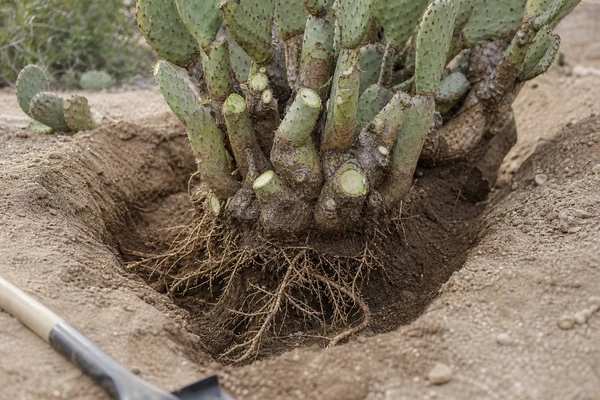
Cactus removal equipment
Dig out the Roots
- Dig a shallow trench around the cactus to expose as many roots as possible.
- Sever any particularly stout roots using a sturdy saw or other sharp digging tool.
- Gently wiggle the stump of the cactus to see if any roots remain attached.
- Loosen and pull out as much of the crown as you can.
- Backfill the hole after inspecting it to make sure no large chunks remain.
Clear Debris and Watch for New Growth
Clean Up
Once the bulk of the cactus has been removed, do a thorough inspection of the area with a rake or other long-handled tool, making sure to look for cactus parts that may have fallen into crevices or gotten buried in gravel, mulch, or grass. It’s better to do this step with a tool than with your hands, even gloved ones!
Pay special attention to any areas where you moved pieces around or set them temporarily while working. Do a good job with this step to make sure the area is safe for people and pets to move through once again. If you’re having someone else haul away the cactus, store the parts in a secure container for at least 48 hours to keep them from blowing, being kicked, or otherwise scattered by wind, pets, or wayward toes.
Resist the urge to simply toss cactus pieces into an open compost pile, where they may sprout anew (Britannica spells this out at britannica.com/science/vegetative-reproduction) or leave behind pesky thorns that stick around long after the rest of the plant has rotted away.
Call in the Pros
Even if you’re an accomplished do-it-yourselfer, it’s best to call in the professionals if the cactus you’re trying to remove is:
Not only will the professionals have the equipment necessary to safely get the job done, they’ll also know the best way to dispose of the remains.
Keep an Eye Out for Regrowth
Cacti can regrow from the smallest of scraps, so be sure to keep an eye on the area where your former cactus resided for the first few weeks following its removal. If you notice any regrowth, tackle it immediately, while it’s still small and unlikely to have well-established roots. Once you’re confident that the area is cactus-free, sift through the dirt for any thorns or other cactus pieces that may have eluded you the first time around. Then it’s time to decide what, if anything, you’d like to put in its place (more landscaping, a new walkway, etc.)
Safe Cactus Removal Starts With Control