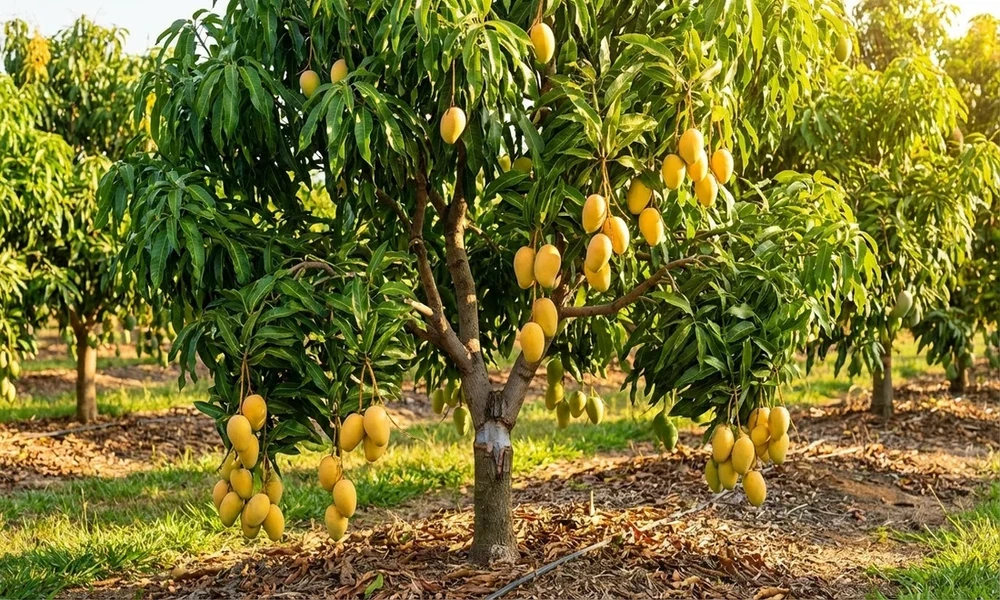

Reach is not merely a convenience measured at harvest. It affects whether blossom is inspected, damaged shoots are noticed, fruit is thinned, summer growth is controlled, and ripe crops are gathered at the right moment. A branch that is awkward to reach tends to receive care late or not at all.
Six reasons place reach near the centre of selection: safe footing, appropriate mature size, workable training, visible tree health, manageable crop load, and future changes in the gardener or household. Lower ladders are the outcome of planning the framework, not a promise that every tree naturally remains within arm’s length.
Reach should be judged from the ground conditions and working positions that exist through the year. Wet lawns, narrow beds, slopes, and crowded boundaries change the safety of the same branch. A low measured canopy is unhelpful if the only working position is unstable or blocked. The same access should support blossom checks, thinning, pruning, and harvest. After mature form, rootstock, and training have been considered together, practical guidance at https://www.fruit-trees.com/ is where a fruit tree specialist explains that a reachable tree receives earlier care and more accurate picking.
The aim is not to eliminate every step or tool. It is to avoid designing routine care around repeated stretching, unstable surfaces, or equipment that the household dislikes using. The framework should invite attention rather than discourage it.
Reach also needs to be evaluated at several points around the tree. A low canopy over a bed or fence is not accessible simply because its measured height is modest.
Reason One: Stable Footing Changes the Safe Height
Around reason one: stable footing changes the safe height, conditions on the ground complete the comparison. Wet grass, gusty picking days, slippery autumn surfaces, hot pruning periods, and winter-softened ground shape the annual rhythm, while one extra metre feels different when a ladder cannot sit squarely or when fruit makes branches flexible can magnify or soften their effect. That context helps reason one: stable footing changes the safe height remain realistic for a British audience.
In reason one: stable footing changes the safe height, one fact gives this part of the decision its scale: working height depends on the surface beneath the gardener as much as the branch above. It affects the tree, the surrounding garden, and the time needed for annual care. Once it is clear, reason one: stable footing changes the safe height becomes a question of fit rather than optimism.
For reason one: stable footing changes the safe height, the choice is easier to judge through placing a ladder footprint on the proposed site and finding that a border edge leaves one leg unsupported. Seen in that setting, the tree must share space with people, crops, weather and available time. Suitability becomes a lived condition rather than a label.
Within reason one: stable footing changes the safe height, a fragile version of the plan relies on measuring reach on level paving while the real tree stands on a slope, wet lawn, or planted border. It tends to work only while weather, time and enthusiasm are unusually generous. Normal difficult weeks then reveal the hidden cost.
Resolve uncertainty through testing likely working positions in winter and during the main harvest season. The outcome should either confirm the arrangement or prompt a change before the tree arrives. In both cases, reason one: stable footing changes the safe height benefits from an explicit decision rather than a hopeful assumption.
Look for a framework serviced from firm, repeatable positions as the practical finish. It should remain visible through blossom checks, thinning, summer pruning, ripeness testing, picking, and winter inspection, when weather and workload expose weak assumptions. A tree that supports a reachable framework that receives timely care and gives a crop that is easier to use under those conditions is genuinely well placed.
Reason Two: Natural Vigour Sets the Starting Point
At the centre of reason two: natural vigour sets the starting point sits a practical condition that cannot be edited later: rootstock, variety, soil, and pruning response shape how readily the tree stays within a chosen envelope. Gardeners gain more by acknowledging it now than by compensating with pruning or watering after planting. The mature tree, not the delivery-day tree, is the relevant picture.
For reason two: natural vigour sets the starting point, imagine the garden several seasons on and then try comparing a naturally restrained framework with a larger tree repeatedly cut back from the same path. The picture is valuable because it includes mature growth and the jobs surrounding it. A plan that works there has stronger foundations than one designed only for planting day.
Seasonal pressure provides another test: wet grass, gusty picking days, slippery autumn surfaces, hot pruning periods, and winter-softened ground. At the same time, fertile ground and strong upright varieties often make the pruning response more vigorous. A choice that tolerates both influences is more likely to remain useful without turning every difficult spell into a rescue operation.
The plan weakens through selecting a vigorous combination and expecting annual severe pruning to create lasting accessibility. Consequences arrive quietly-jobs are delayed, fruit goes unused, or the framework is repeatedly forced back into bounds. Those symptoms show that reason two: natural vigour sets the starting point was never fully resolved.
After weighing reason two: natural vigour sets the starting point, handled with care, this part of the brief produces a tree whose natural behaviour supports rather than resists control. It gives the tree a coherent role across blossom checks, thinning, summer pruning, ripeness testing, picking, and winter inspection and prevents reason two: natural vigour sets the starting point from becoming detached from a reachable framework that receives timely care and gives a crop that is easier to use. The result remains easy to explain after the novelty has passed.
Ground the choice by matching mature dimensions and growth habit to the maximum comfortable working height. The exercise is simple enough to repeat yet strong enough to disqualify a poor position. That balance is exactly what reason two: natural vigour sets the starting point requires.
Reason Three: Training Directs Work Into Reach
Test the idea against standing beside a planned espalier and checking whether both ends remain reachable past neighbouring plants. That small exercise reveals requirements for space, support, timing or access that are easily missed during selection. Each requirement belongs in the brief before the tree arrives.
The costly shortcut is choosing a named form without installing support or accepting its pruning rhythm. Its weakness rarely appears all at once; it surfaces through missed watering, awkward cuts, wasted fruit or access that becomes steadily less pleasant. By then, reason three: training directs work into reach has turned into a maintenance problem.
The decision becomes more precise when cordons, espaliers, fans, stepovers, and well-formed bushes organise branches for different sites. For gardeners who want productive trees without relying on awkward ladder work, this is not a minor technical detail but part of the future working arrangement. It should shape the shortlist before crop promises or decorative appeal are allowed to dominate.
Use a direct test: drawing where permanent branches, ties, cuts, and fruiting wood will sit. The answer should be specific enough to change the shortlist or the planting position. It gives reason three: training directs work into reach a threshold based on evidence rather than preference.
Around reason three: training directs work into reach, allow for unfavourable weeks as well as ideal ones. Wet grass, gusty picking days, slippery autumn surfaces, hot pruning periods, and winter-softened ground can interrupt routines, while a wall-trained tree needs lateral reach and fixing access even when height is limited influences recovery and consistency. The strongest choice remains understandable and manageable through both.
The intended outcome is a training system whose main tasks occur in accessible zones. It keeps reason three: training directs work into reach connected to a reachable framework that receives timely care and gives a crop that is easier to use throughout blossom checks, thinning, summer pruning, ripeness testing, picking, and winter inspection. The tree then earns its place through useful performance and manageable care rather than through first impressions alone.
Reason Four: Close Inspection Improves Timing
One concrete check is spotting a constricting tie during a normal walk rather than during the next annual pruning session. It converts a broad preference into an observable situation and gives the gardener evidence that can be discussed, recorded and reviewed. That evidence sharpens reason four: close inspection improves timing without creating a complicated rule.
Read reason four: close inspection improves timing through the site first. Reachable leaves, shoots, blossom, ties, and fruit are observed more frequently and accurately. That observation gives gardeners who want productive trees without relying on awkward ladder work a firm basis for comparing options and prevents a desirable fruit name from concealing a poor physical match.
Risk enters when the gardener chooses waiting for a problem to become visible from a window or path. The apparent saving in space or effort is often repaid through years of corrective work. A sound brief makes that trade-off visible before commitment.
The British season rarely repeats neatly. Wet grass, gusty picking days, slippery autumn surfaces, hot pruning periods, and winter-softened ground alter growth and care, and small changes are easier to interpret at eye level than from the ground beneath a high crown further shapes the outcome. The plan therefore needs enough margin to absorb variation without losing its purpose.
Ask for practical proof by building routine inspection into watering, mowing, or daily movement through the garden. Evidence from the garden carries more weight than a vague expectation and gives the gardener a reasoned basis for comparing similar options.
The better route ends in earlier responses to rubbing ties, damaged growth, crowded fruit, and ripeness. Garden and gardener can then move through blossom checks, thinning, summer pruning, ripeness testing, picking, and winter inspection without repeatedly correcting the original decision. In that form, reason four: close inspection improves timing strengthens a reachable framework that receives timely care and gives a crop that is easier to use rather than competing with it.
Reason Five: Harvest Size Must Match Picking Capacity
Around reason five: harvest size must match picking capacity, local conditions prevent the answer from becoming a formula. With wet grass, gusty picking days, slippery autumn surfaces, hot pruning periods, and winter-softened ground, the significance of wind, rain, birds, and rapid ripening often compress the ideal picking window changes from garden to garden. Resilience comes from acknowledging that interaction, not from pretending it can be designed away.
Reality enters the comparison through choosing to gather several smaller batches from ground level across a week. The example connects the proposed tree to a household habit instead of treating it as a self-contained garden feature. It also exposes which compromises would be repeated year after year.
In reason five: harvest size must match picking capacity, before comparing varieties, pause over one physical truth: a crop is useful only when it is gathered safely and at an appropriate stage. It changes how reason five: harvest size must match picking capacity works in an ordinary garden and what the gardener must be able to maintain. A sound shortlist begins with that constraint and lets cultivar preference follow.
One assumption deserves particular suspicion: planning for yield without estimating the time and positions needed to pick it. It shifts responsibility from the present decision to a future gardener who must repeatedly prune, protect or reorganise the space. A better answer removes that burden at source.
The most useful next step is calculating how many sessions, containers, helpers, and storage trips the likely crop requires. Record what the exercise reveals and compare every candidate against the same standard. That keeps the decision transparent and repeatable. Once the evidence is assembled, the right moment to buy fruit trees is when the site brief, the likely workload, and the intended harvest all point in the same direction.
A balanced answer creates a harvest divided into manageable work rather than one exhausting event. That outcome gives reason five: harvest size must match picking capacity continuity from one season to the next and keeps the work of blossom checks, thinning, summer pruning, ripeness testing, picking, and winter inspection in scale with a reachable framework that receives timely care and gives a crop that is easier to use. Nothing essential depends on unusually generous conditions.
Reason Six: Access Needs Change Over a Tree’s Life
In reason six: access needs change over a tree’s life, one fact gives this part of the decision its scale: trees and households mature together, while strength, confidence, available help, and garden use change. It affects the tree, the surrounding garden, and the time needed for annual care. Once it is clear, reason six: access needs change over a tree’s life becomes a question of fit rather than optimism.
Around reason six: access needs change over a tree’s life, conditions on the ground complete the comparison. Wet grass, gusty picking days, slippery autumn surfaces, hot pruning periods, and winter-softened ground shape the annual rhythm, while succession pruning and clear paths help preserve access as the framework ages can magnify or soften their effect. That context helps reason six: access needs change over a tree’s life remain realistic for a British audience.
Within reason six: access needs change over a tree’s life, a fragile version of the plan relies on designing the framework around today’s maximum reach and assuming it remains appropriate indefinitely. It tends to work only while weather, time and enthusiasm are unusually generous. Normal difficult weeks then reveal the hidden cost.
For reason six: access needs change over a tree’s life, the choice is easier to judge through lowering future fruiting wood gradually before high branches become the only productive part. Seen in that setting, the tree must share space with people, crops, weather and available time. Suitability becomes a lived condition rather than a label.
To assess reason six: access needs change over a tree’s life, a disciplined comparison asks the gardener to try choosing a form with adjustment options and keeping renewal growth within useful zones. The result can be used immediately and reviewed after the first season, making reason six: access needs change over a tree’s life easier to explain and refine.
The final picture is a tree that remains inclusive and worth maintaining over many seasons. It fits the garden’s routine through blossom checks, thinning, summer pruning, ripeness testing, picking, and winter inspection and gives practical expression to a reachable framework that receives timely care and gives a crop that is easier to use. A choice with that clarity remains valuable even when individual seasons vary.