
Across the counties of Norfolk, Suffolk, Cambridgeshire, and Lincolnshire, commercial operations face unique challenges in managing their internal environments. The performance of a building’s heating and cooling apparatus directly influences both operational costs and its environmental footprint.
Modern climate control solutions offer a significant departure from older, less efficient equipment. These advanced systems are designed to deliver superior performance while consuming far less power.
This article explores the practical steps and technologies available. It will cover intelligent design and installation approaches, methods for optimising climate control, and the latest innovations in the field.
The advantages of such improvements are twofold. Companies can expect an immediate enhancement in workplace comfort for staff and clients. Concurrently, they position themselves for considerable long-term financial savings through reduced energy utilisation.
For commercial entities in the region, investing in these modern systems represents more than just an equipment update. It is a strategic move towards greater operational efficiency and environmental responsibility.
Key Takeaways
- The region’s commercial sector has a clear opportunity to improve operational efficiency through modern climate management.
- Up-to-date heating and cooling equipment can substantially lower ongoing energy expenditure.
- Reducing a building’s energy consumption is a direct contribution to lessening environmental impact.
- Contemporary technologies provide more reliable and controllable indoor environments.
- Enhanced staff comfort and wellbeing is a direct benefit of a well-regulated internal atmosphere.
- Such an investment should be viewed as a strategic business decision with a compelling financial rationale.
Understanding the Importance of Energy-Efficient HVAC Upgrades
Outdated mechanical systems for heating and cooling are a primary source of wasted capital in many properties. They consume excessive power, leading to unnecessarily high operational costs.
Modern upgrades present a compelling financial case. For instance, an air source heat pump can reduce heating bills by up to 50% compared to traditional systems.
| Feature | Traditional Heating System | Air Source Heat Pump |
|---|---|---|
| Primary Energy Source | Gas or Electric Resistance | Ambient Air (Renewable) |
| Typical Efficiency | Lower (e.g., 80-95%) | High (COP of 3-4) |
| Impact on Heating Bills | Higher long-term costs | Up to 50% reduction |
This leap in efficiency directly improves a company’s bottom line. It also significantly cuts carbon emissions, addressing environmental responsibilities.
The long-term analysis is favourable. Newer systems maintain consistent performance and suffer less degradation.
They also incur lower maintenance expenses and have a longer operational lifespan. This makes the initial investment strategically sound.
There is growing regulatory pressure to adopt sustainable practices. Improving a building’s energy use is now a commercial imperative.
The Role of Energy Efficiency in Commercial Properties
Modern tenants and buyers increasingly prioritise sustainable features when evaluating commercial spaces. This shift makes operational efficiency a central pillar of property management.
Demonstrating environmental responsibility offers a clear competitive edge. A company that reduces its carbon footprint enhances its brand and appeals to eco-conscious clients.
Proper temperature control is fundamental to tenant satisfaction. Reliable heating and cooling systems create a comfortable, productive environment in offices and business parks.
Such improvements help organisations meet strict sustainability targets. They also ensure compliance with evolving environmental reporting standards.
A building’s energy performance rating directly influences its market value. The table below illustrates key differences.
| Aspect | Property with Traditional Systems | Property with High-Efficiency Systems |
|---|---|---|
| EPC Rating | Typically Lower (Band D-G) | Typically Higher (Band A-C) |
| Market Appeal | Standard Demand | Enhanced Tenant Demand |
| Rental Value | Market Rate | Potential for Premium |
| Operating Costs | Higher Long-term | Substantially Reduced |
Tenants now expect modern, efficient facilities as standard. This makes investing in a better system essential for property competitiveness.
Ultimately, these enhancements contribute to holistic building performance. They extend beyond climate control to improve the entire asset.
Design and Installation of Advanced HVAC Systems
The journey to a superior indoor environment begins long before any physical work starts on site. A successful outcome depends on a seamless process from initial concept to final commissioning.
This integrated approach ensures every component is specified for optimal performance. It also guarantees that all elements work together harmoniously.
Integrated Design and Installation Approaches
A single, experienced team managing the entire project is crucial. This method, known as design installation, prevents costly errors and delays.
From the first site survey, specialists assess the building’s needs. They plan the optimal layout for heating and air conditioning systems.
Expert Engineering and Compliance
Qualified engineers conduct detailed assessments of the commercial space. Their expertise ensures the proposed solution meets all operational demands.
They also navigate complex building regulations and safety standards. Compliance is built into the plan from the very start, avoiding future issues.
| Aspect | Fragmented Approach | Integrated Design Install Approach |
|---|---|---|
| Project Coordination | Multiple contractors, potential for miscommunication | Single point of responsibility, streamlined workflow |
| System Compatibility | Risk of mismatched components | Guaranteed seamless integration from design stage |
| Regulatory Compliance | Often addressed reactively | Proactively engineered into the solution |
| Long-Term Performance | Higher risk of operational issues | Optimised for reliability and efficiency over lifespan |
This professional management coordinates all work streams. The result is a reliable installation delivered on schedule, built to last.
Optimising Climate Control for Enhanced Productivity
Creating an inviting space for work and client interaction hinges on consistent comfort. From multi-storey offices to medical waiting rooms, every commercial environment requires reliable temperature management.
Effective climate control directly influences how people perform and feel. It transforms cold or stuffy buildings into productive, welcoming environments.
Impact on Team Productivity
A comfortable team is a more productive one. Studies show that even minor temperature fluctuations can reduce concentration and work quality.
Inadequate heating or poor air conditioning creates physical distractions. This discomfort leads to decreased output and higher absenteeism.
Modern systems maintain optimal conditions consistently. This stability allows staff to focus entirely on their tasks without environmental interruptions.
Customer Comfort and Satisfaction
First impressions matter in every customer-facing business. The immediate feel of a space upon entry sets the tone for the entire experience.
In retail, hospitality, or professional services, ambient air quality and temperature control contribute significantly to satisfaction. Clients and visitors feel more at ease in a well-regulated environment.
This comfort encourages longer visits and positive perceptions of the business. It represents a direct investment in client relations and brand reputation.
| Commercial Space Type | Optimal Temperature Range | Primary Benefit |
|---|---|---|
| Office Environments | 20-22°C | Maximises cognitive performance and concentration |
| Retail Spaces | 18-20°C | Encourages browsing and comfortable shopping experience |
| Hospitality/Waiting Areas | 21-23°C | Promotes relaxation and positive first impressions |
| Light Industrial Areas | 16-18°C | Balances physical comfort with safety during activity |
Investing in advanced climate control is ultimately an investment in human capital. The returns manifest through improved team performance, reduced staff turnover, and enhanced customer loyalty.
Energy-Efficient HVAC Upgrades for East Anglia Businesses
From historic market towns to modern business parks, the building stock across the region presents varied challenges. Successful implementation of modern climate control requires deep local knowledge.
Specialists operating across Norfolk, Suffolk, Cambridgeshire, and Lincolnshire understand these nuances. They are familiar with the mix of conservation areas, contemporary developments, and industrial facilities common here.
This regional expertise ensures solutions are properly tailored. It covers everything from planning permissions to the specific heating demands of different building ages and types.
| Aspect | Local Specialist | Distant Provider |
|---|---|---|
| Knowledge of Regional Architecture | Intimate understanding of local building styles and materials | Generic approach that may not suit historic or regional features |
| Understanding of Local Regulations | Familiar with specific council planning requirements | May lack awareness of area-specific compliance needs |
| Response Time for Service Calls | Typically within hours due to local presence | Often delayed by travel time and scheduling |
| Tailoring to Building Type | Solutions designed for the region’s common structures | One-size-fits-all approach less likely to optimise performance |
Choosing a provider with this local footprint means faster service and support. It also leads to systems designed for long-term reliability in the local climate.
For commercial operations, this translates to minimal disruption during installation and consistent performance afterwards. The right regional partner delivers air and temperature management that truly fits the property.
Innovative Air Conditioning Solutions
A multi-split RAC installation represents a significant leap forward in how commercial spaces manage their internal climate. These modern solutions offer superior performance through intelligent design.
They feature two individual components. One or more indoor fan coil units work with external condenser units. This split design allows for flexible placement based on property size and thermal demand.
Partnering with Norfolk Air Conditioning Ltd for Trusted Services
For reliable performance, many organisations turn to local specialists. Norfolk Air Conditioning provides expert guidance on these advanced systems. The team at Norfolk Air Conditioning Ltd understands the specific needs of commercial clients.
The external condenser houses the compressor and condenser. Inside, fan coil units distribute filtered air. These can be wall-mounted, concealed, or ceiling-mounted for discreet operation.
Incorporating Heat Pumps and Split AC Systems
Modern systems often integrate heat pump technology. This allows a single unit to provide both cooling and heating. It is a highly efficient method for year-round climate control.
RAC systems deliver more reliable temperature management. They also reduce operational noise and lower a property’s carbon footprint. This makes them a responsible choice for forward-thinking operations.
Businesses can select from various configurations to match their space:
- High or low wall-mounted units for easy access.
- Concealed or ducted systems for a minimalist aesthetic.
- Ceiling-mounted options for optimal air distribution.
Specialists help choose the right setup based on building layout and occupancy. This ensures the new air conditioning system meets all functional and design requirements.
Tailored HVAC Solutions for Diverse Business Needs
From bustling open-plan offices to vast industrial warehouses, each space presents a distinct set of challenges for temperature control. Effective climate management solutions must be customised to address these unique operational requirements.
Every project is designed around specific team needs, ensuring the final systems align perfectly with daily work flows.
Customised Systems for Offices and Industrial Spaces
Office environments prioritise consistent comfort for occupants. Their systems must manage occupancy density and provide even air distribution.
Industrial spaces, like factories or labs, have different needs. They often deal with heat from machinery and require robust ventilation solutions.
Specific industry regulations also shape the requirements. Food production or pharmaceutical facilities have strict standards for heating and air quality that must be met.
Dedicated Support from Norfolk Air Conditioning Ltd
Expert support is vital throughout a project’s lifecycle. This begins with a detailed consultation to understand the client’s unique needs.
The experienced team then recommends systems that balance performance, efficiency, and budget. This careful planning prevents over-specification or under-capacity issues.
Dedicated service continues through the installation phase and into long-term aftercare. This ensures the climate control solution performs reliably for years.
| Consideration | Office Environment | Industrial Space |
|---|---|---|
| Primary Focus | Occupant comfort and productivity | Process temperature control and ventilation |
| Heat Load Sources | People, computers, lighting | Machinery, industrial processes |
| Air Quality Needs | General filtration for wellness | Specialised filtration for fumes or particulates |
| System Control | Zoned for different departments | Centralised for large, open areas |
| Regulatory Drivers | Building regulations, wellbeing standards | Industry-specific health & safety codes |
This tailored approach guarantees that the final climate control work is perfectly suited to the building’s use. It delivers optimal performance without compromise.
Ensuring System Efficiency Through Regular Maintenance
The true value of a modern climate control investment is realised not just at installation, but through its sustained performance over many years. This long-term reliability depends entirely on a disciplined schedule of professional maintenance.
Alongside the initial installation, ongoing support is vital. It keeps heating and air conditioning systems running efficiently throughout their operational life.
Preventative Maintenance and Aftercare
Regular service reduces costly downtime and extends equipment lifespan. It also ensures continued compliance with safety and performance standards.
Typical maintenance services include filter replacements and refrigerant checks. Component inspections and performance testing are conducted at scheduled intervals.
This proactive approach identifies potential issues before they escalate. It helps avoid emergency repairs and complete system failures, saving time and money.
Every project includes a robust guarantee. Ongoing servicing and maintenance contracts are available for long-term peace of mind.
These maintenance services preserve energy efficiency. They ensure systems operate at optimal levels rather than gradually degrading over time.
Scheduled visits minimise disruption. Companies can plan service time around their operational requirements, preventing unexpected issues.
Ultimately, consistent maintenance protects the heating and cooling investment. It is the most effective way to guarantee comfort, efficiency, and reliability for years to come.
Sustainable Technologies and Air Source Heat Pumps
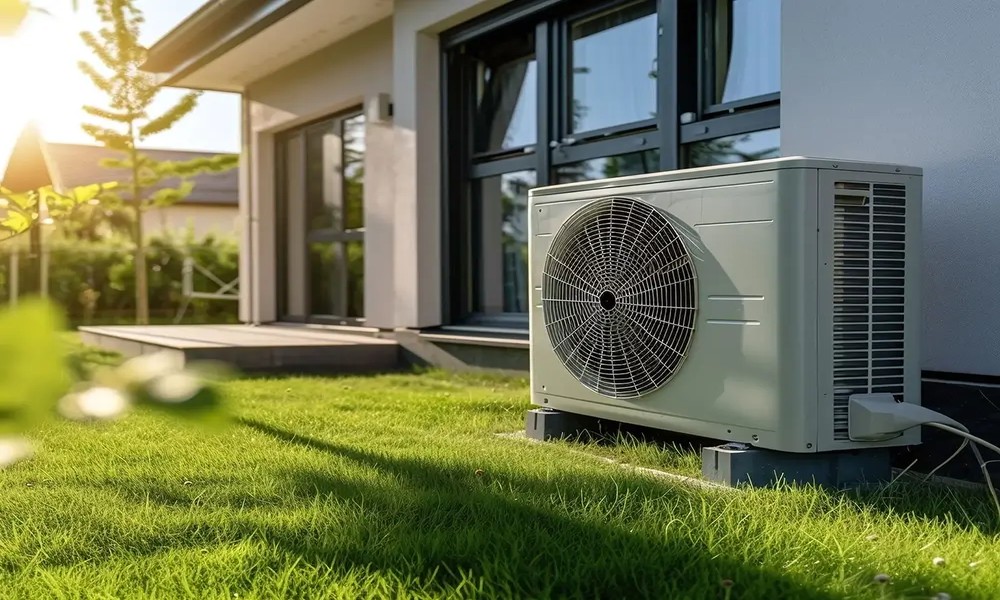
Air source heat pumps have emerged as a leading solution for decarbonising building heating across the UK. These systems transfer thermal energy from the outside air to provide indoor warmth.
Even in freezing temperatures, a modern heat pump can extract sufficient heat. This makes it a reliable year-round climate control system.
Energy Savings with Modern Heat Pump Solutions
The financial case is compelling. Compared to traditional heating, a heat pump can reduce bills by up to 50%.
This is due to its high efficiency. For every unit of electricity used, it delivers multiple units of heat.
Eligible commercial properties can access the £7,500 Boiler Upgrade Scheme grant. This significantly lowers the upfront cost of installation.
The same system provides cooling in summer. This versatility eliminates the need for separate equipment.
| Aspect | Air Source Heat Pump | Traditional Heating System |
|---|---|---|
| Efficiency (Typical COP) | 3 – 4 | 0.8 – 0.95 |
| Annual Running Cost | Substantially Lower | Higher |
| Grant Available | Yes (£7,500 BUS) | No |
| Carbon Impact | Low | High |
Major brands like Daikin, Mitsubishi, and Samsung offer robust units. Modern heat pump installations operate quietly and need minimal adjustment.
This technology represents a future-proof investment. It aligns perfectly with national decarbonisation goals.
Innovative Climate Control and Indoor Air Quality Enhancements
Advanced air purification technologies now offer powerful solutions to combat indoor pollutants in workplaces. Beyond temperature control, the cleanliness of the air we breathe is paramount for health.
This focus on air quality has led to significant innovations. Systems like the Plasma Quad Connect from Mitsubishi Electric address this need directly.
Plasma Quad Technology for Cleaner Air
The Plasma Quad Connect device targets six key indoor contaminants. These include viruses, bacteria, and microscopic PM 2.5 particles.
It also neutralises allergens, dust, and mould spores. This comprehensive approach creates a much healthier internal environment.
The technology works as an electrical curtain. It catches and deactivates harmful particles passing through the system.
This bolt-on purifier is highly effective. Data shows it inhibits 99.8% of SARS-CoV-2, addressing ongoing pathogen concerns.
A major advantage is its retrofit capability. It can be added to existing M Series, Mr Slim, and City Multi indoor units.
The device also integrates seamlessly into new installations. This flexibility makes advanced purification accessible to all.
Clean air is crucial in offices, medical surgeries, and retail spaces. It supports occupant wellbeing and can reduce illness-related absences.
Improving indoor air quality is a smart investment in any commercial setting. It enhances the overall control of the building’s environment.
Leveraging Local Expertise in East Anglia Projects
Local specialists bring invaluable insight into the unique architectural and regulatory landscape of East Anglia. This deep-rooted knowledge is critical for any commercial climate control project.
Their experience ensures solutions are tailored to the region’s specific heating and air management needs.
Local Projects Across Norfolk, Suffolk, and Cambridgeshire
Services are delivered across Norfolk, Suffolk, Cambridgeshire, and Lincolnshire. This includes towns like Norwich, Ipswich, Cambridge, King’s Lynn, and Peterborough.
Years of working on local sites mean familiarity with diverse building types. Teams understand planning requirements and common site-specific challenges.
This experience allows engineers to anticipate issues. It streamlines project delivery and informs practical solutions.
Collaborating with Norfolk Air Conditioning for Bespoke Solutions
The team comprises fully qualified mechanical and electrical engineers. They work to the latest industry regulations, ensuring all work is compliant and certified.
Proximity enables responsive service. Engineers can attend sites promptly for consultations or maintenance.
Established relationships with local suppliers and authorities facilitate smoother project execution. This experience over many years translates into reliable heating and air conditioning installations.
Cutting-Edge Design Install Solutions and Project Management
The hallmark of a professional climate control upgrade is its seamless integration into an active commercial environment. Achieving this requires expert project management focused on precision and minimal disruption.
This approach centres on two core principles: efficient delivery and the use of innovative strategies. Together, they ensure a smooth process from start to finish.
Efficient Project Delivery and Minimal Disruption
A single point of contact manages all timelines, budgets, and communication. This simplifies coordination for the client company throughout the project.
Experienced teams plan meticulously around daily operations. They offer phased refurbishments and out-of-hours work to keep businesses running.
The goal is completion to the highest standard, on time and on budget. This reflects years of refined management experience.
Innovative Strategies by Norfolk Air Conditioning
Thorough site assessments and detailed planning prevent unexpected delays. This proactive step is crucial for a successful installation.
Innovative strategies incorporate the latest techniques and equipment. Systems are fitted efficiently using cutting-edge methods.
Professional job management coordinates multiple trades. Heating, air conditioning, and electrical works proceed in a logical sequence.
Clear communication keeps all stakeholders informed. It allows businesses to plan confidently around the installations.
| Aspect | Professional Project Management | Fragmented Coordination |
|---|---|---|
| Timeline Adherence | High; detailed scheduling from day one | Unpredictable; prone to delays |
| On-Site Disruption | Minimal; phased and out-of-hours work | Significant; often during core hours |
| Trade Sequencing | Logical flow managed by a lead engineer | Uncoordinated, causing conflicts on site |
| Client Communication | Single, clear point of contact | Multiple channels, leading to confusion |
This minimal disruption approach protects business continuity. It prevents revenue loss and maintains normal operations.
Ultimately, it is the result of dedicated service and solutions developed over many years.
Conclusion
The strategic upgrade of a building’s heating and air systems is a decisive step towards operational excellence. Modern climate control delivers measurable gains in energy use and lowers ongoing costs.
Quality installations, from design to maintenance, ensure long-term system reliability. Working with an experienced company guarantees a solution tailored to your specific needs and requirements.
We highly recommend seeking professional advice to navigate these upgrades. Get in touch with a specialist to discuss your project and explore the right service for your premises.
This investment yields returns through improved comfort, sustainability, and future-proofed infrastructure for local businesses.
FAQ
What are the main benefits of upgrading our commercial heating and cooling system?
How does a heat pump work for a business property?
Why is professional design and installation so crucial?
What does a typical maintenance service include?
Can new systems be installed with minimal disruption to our daily work?
Are there solutions to improve indoor air quality alongside temperature control?
Why should we choose a local company for our project in East Anglia?