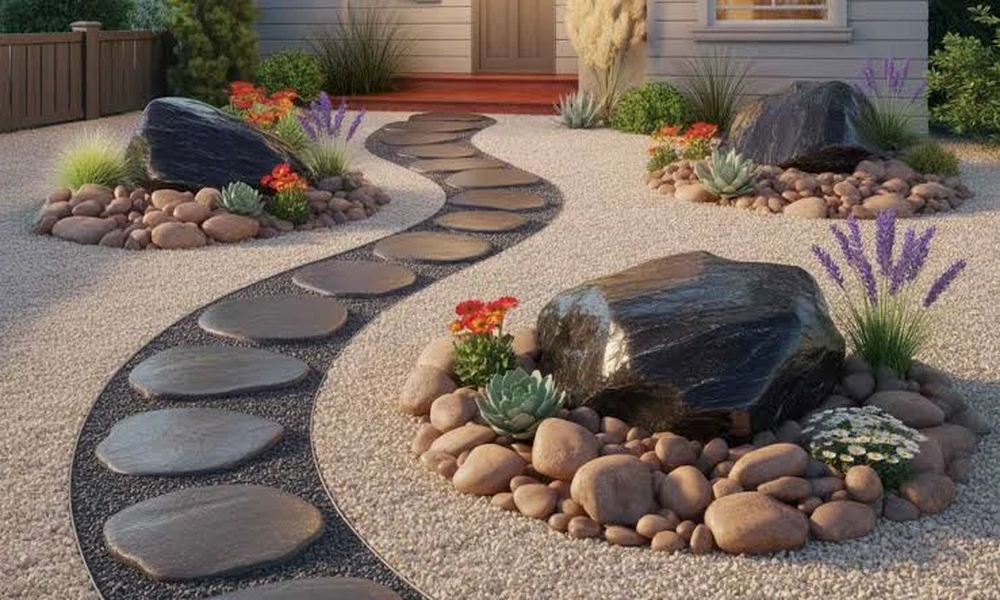

Every homeowner reaches a point where the lawn alone stops doing the job. Grass demands constant mowing, watering, and feeding, yet it rarely gives a garden the structure or character that makes people pause and look twice. This is where mineral materials quietly change everything. Stone brings permanence, texture, and a sense of intention to outdoor spaces that plants and turf simply cannot deliver on their own. Understanding how to work with it is the difference between a yard that feels thrown together and one that looks professionally composed.
Why Stone Belongs at the Center of Modern Landscape Design
The appeal of stone starts with something obvious but easy to underestimate: it lasts. A wooden border rots, mulch breaks down and needs replacing every season, and painted surfaces fade. Stone endures freeze-thaw cycles, heavy rain, blazing sun, and foot traffic without complaint. For anyone tired of the endless maintenance treadmill, that durability alone justifies the investment.
Beyond longevity, stone offers a visual richness that manufactured materials struggle to match. Natural pieces carry subtle variation in color and shape, so no two installations look identical. A bed of rounded river pebbles reads as soft and calming, while angular crushed rock feels crisp and contemporary. That range means you can use the same fundamental material to achieve wildly different moods depending on the size, finish, and hue you select.
There is also a practical, environmental argument. Well-chosen decorative landscaping stones suppress weeds, retain soil moisture, and reduce the need for chemical treatments. When laid over a permeable base, they let rainwater filter back into the ground rather than running off into storm drains. In an era where water conservation matters more each year, a stone-forward yard is often the more responsible choice.
Matching the Right Stone to the Right Job
One of the most common mistakes people make is treating all stone as interchangeable. It is not. Size, shape, and color each serve distinct purposes, and getting the pairing right is what separates amateur results from polished ones.
For pathways and high-traffic zones, larger, flatter stones or compacted gravel provide stability underfoot. Fine pea gravel feels pleasant but shifts easily, so it works better in decorative accents than in main walkways. Medium stones in the one-to-two-inch range strike a useful balance, staying put while still offering visual interest.
Around plant beds, smaller pebbles and pea-sized stone shine. They tuck neatly against stems, hold moisture at the root zone, and create a clean line between greenery and hardscape. Darker stones make vibrant foliage pop, while pale, neutral tones lend a bright, airy feeling to shaded corners that might otherwise look gloomy.
For dramatic focal points, oversized boulders and large accent stones do the heavy lifting. A single well-placed boulder can anchor an entire bed, giving the eye a resting point and a sense of scale. Grouping three stones of varying sizes together, rather than scattering them evenly, mimics how rock formations appear in nature and always looks more convincing.
Color as a Design Tool
Color deserves more thought than most people give it. The stones you choose should relate to the fixed elements of your property, especially the house itself. A home with warm brick or beige siding harmonizes beautifully with tan, buff, and earthy brown stone. A cool, gray, modern facade pairs naturally with charcoal, slate, and crisp white stone.
Contrast can be powerful, but it needs a purpose. Black polished pebbles set against silvery ornamental grasses create a striking, gallery-like effect. White marble chips glowing at the base of deep green shrubs draw the eye exactly where you want it. The key is restraint. Limiting a design to two or three coordinated tones keeps it looking curated rather than chaotic. When too many colors compete, the whole space reads as busy and unplanned.
Preparing the Ground the Right Way
Even the most beautiful stone will disappoint if the foundation beneath it is neglected. Preparation is unglamorous but non-negotiable. Start by clearing the area of existing vegetation and roots, then grade the surface so water drains away from structures rather than pooling.
Landscape fabric laid over the prepared soil is a worthwhile step in most applications. It blocks weeds from pushing through while still allowing water to pass, dramatically cutting future maintenance. For pathways and patios, a compacted base layer of crushed stone underneath the decorative surface prevents shifting and sinking over time. Edging, whether metal, stone, or heavy plastic, keeps everything contained and gives the installation a finished, deliberate edge.
Depth matters too. A layer that is too thin exposes the fabric or soil beneath and looks sparse, while an excessively deep layer wastes material and becomes unstable underfoot. For most decorative applications, a depth of roughly two inches provides full coverage and a substantial appearance without excess.
Low Maintenance Does Not Mean No Maintenance
Part of stone’s charm is how little upkeep it requires compared to a lawn, but a small amount of attention keeps it looking its best. Leaves and organic debris should be cleared before they break down and create pockets of soil where weeds can take hold. An occasional rinse with a garden hose restores the natural color of pebbles dulled by dust. Every few years, topping up areas where stone has thinned or migrated keeps beds looking full.
These tasks amount to a fraction of the effort a grass lawn demands, and they happen on your schedule rather than every weekend during growing season. For busy households, that reclaimed time is one of stone’s most underrated benefits.
Building a Cohesive Outdoor Story
The most successful stone landscapes feel connected rather than piecemeal. Repeating a particular stone type in several areas of the yard ties distant sections together visually. A border of the same pebble used around both the front beds and the backyard patio creates a rhythm that the eye follows naturally, making the whole property feel intentional and unified.
Think of stone as the connective tissue of your outdoor design. It fills the gaps between plantings, frames your favorite features, and provides the calm, neutral backdrop against which flowers and foliage perform. When chosen thoughtfully and installed with care, it does something remarkable: it makes everything else in the garden look better while asking almost nothing in return.
For anyone weighing whether to invest in a stone-based landscape, the calculation is straightforward. You trade a modest upfront effort for years of durability, reduced maintenance, water savings, and a finished look that manufactured materials rarely achieve. In a well-designed yard, stone is not merely a filler between the plants you actually care about. It is the quiet foundation that holds the entire composition together and lets your outdoor space finally look the way you always pictured it.