
Landscaping isn’t just about planting flowers or keeping grass trimmed. It’s a blend of art, science, and ongoing maintenance that enhances beauty, function, and value. Depending on whether you have a home or a business property, your landscaping needs can vary a lot. Let’s discuss the most important landscaping services, what they involve, and how they benefit residential and commercial properties.
Why Landscaping Matters
Before diving into specific services, have you ever wondered why so many property owners invest in high-quality landscaping?
- It boosts curb appeal; well-designed outdoor spaces make a lasting impression.
- It adds property value; both homeowners and business owners can see a higher valuation when landscaping is well done.
- It improves the environment & well-being; green spaces reduce heat, help with air quality, and give people spaces to relax or work more pleasantly.
With that in mind, here are the key services to look for when landscaping your property.
1. Landscape Design & Consultation
What It Is
This is the foundation. It involves meeting with you, understanding your goals (aesthetic, utility, sustainability), evaluating your site (soil, sunlight, slope, drainage), and drawing up a plan: layout of plantings, hardscape elements (paths, patios), water features, lighting, etc.
Why It’s Important
- Prevents costly mistakes (wrong plants, poor drainage, etc.).
- Helps align landscaping with architectural style (especially for commercial properties).
- For commercial sites, good design incorporates visitor flow, branding, safety, visibility.
Residential vs Commercial
- Residential: More personal, often focused on backyard enjoyment, privacy, seasonal aesthetics.
- Commercial: Must consider high traffic, signage, durability, consistent maintenance and safety.
2. Hardscaping & Structural Features
Hardscaping refers to non-living elements like patios, walkways, retaining walls, decks, pergolas, outdoor kitchens, and other built structures.
What It Covers
- Paving: stone, concrete, bricks, tiles.
- Retaining walls: to manage slopes, soil erosion.
- Structures: gazebos, pergolas, sheds, seating walls.
- Drainage systems, steps, driveways, walkways.
Benefits
- Improves functionality: paths, patios, usable outdoor living or business spaces.
- Enhances durability and reduces maintenance (proper drainage, solid materials).
- Adds visual interest and finishes to landscaping.
Considerations
- Cost can be higher, both for material and labor.
- Needs good planning to integrate plants, lighting, and water flow.
- Commercial hardscaping may require stronger materials to withstand heavier foot traffic or vehicle loads.
3. Softscaping (Plants, Trees, Shrubs, Lawns, Flower Beds)
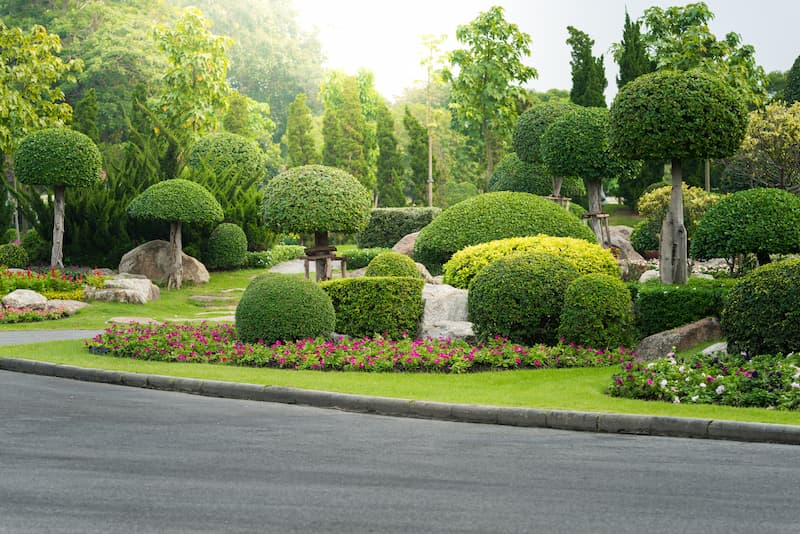
Softscaping is everything alive: vegetation, lawns, seasonal flowers, trees, groundcover.
Key Services
- Planting, pruning, trimming, removal & replacement.
- Lawn installation: sod or seed.
- Flower beds and seasonal plantings.
- Native/drought-tolerant plants for reducing water use.
Why It Matters
- Greenery creates aesthetic appeal, shading, cooling effects.
- Trees provide environmental benefits (oxygen, shade, wildlife habitat).
- A healthy lawn or preserved natural planting boosts curb appeal and satisfaction.
Differences
- Residential: more variety, focus on aesthetic details, perhaps edible or ornamental gardens.
- Commercial: need for consistent look, safety (visibility, paths), easy maintenance, lower risk of invasive species.
4. Irrigation Design, Installation & Maintenance
Watering efficiently and properly is a key component of successful landscaping.
What’s Involved
- Designing irrigation systems that match planting zones (so all plants get the right amount).
- Installing drip systems, sprinklers, timers, smart controls.
- Repairing leaks, winterizing, adjusting with seasons.
Advantages
- Saves water and money.
- Prevents overwatering or underwatering (both of which harm plants).
- Helps maintain landscape health even in hot/dry seasons.
This service is especially critical in commercial setups where water bills can be high and consistency is expected.
5. Lighting and Outdoor Features
Well-designed lighting and outdoor features like water elements or structures add both beauty and utility.
Types of Features
- Landscape lighting: path lights, accent lights, security lighting.
- Water features: ponds, fountains, water walls.
- Outdoor living: patios, seating, firepits, pergolas.
- Vertical gardens, roof gardens, green walls.
Why Choose These
- Creates ambiance and allows use of outdoor spaces after dark.
- Boosts safety (walkways, stairs, entrances).
- Serves as a unique design statement, especially for businesses wanting to impress visitors.
6. Maintenance Services
No landscape stays perfect without regular care. Maintenance includes:
- Lawn mowing, edging, weed control.
- Pruning shrubs and trees.
- Fertilization, pest and disease control.
- Mulching, leaf removal, seasonal cleanup.
- Hardscape cleaning, replacing damaged plants, refreshing features.
Importance
- Maintains aesthetic, health, and safety of landscape.
- Prevents small issues from becoming big problems (e.g. pest infestations, broken irrigation).
- Preserves return on investment for both home and commercial properties.
For commercial properties, maintenance is often arranged under contract so services are reliable and scheduled.
7. Environmental & Sustainable Landscaping
As more people become conscious of climate impacts, sustainable landscaping services are growing in importance.
Examples
- Planting native or drought-tolerant species.
- Using organic soil amendments, reducing chemical fertilizers or pesticides.
- Rainwater harvesting, smart irrigation.
- Permeable paving to reduce runoff.
- Green roofs, vertical gardens.
Why It’s Critical
- Cuts long-term maintenance and water costs.
- Supports biodiversity.
- Helps meet regulatory or community standards for green building or CSR (corporate social responsibility).
8. Special Services for Commercial Properties
Commercial landscapes often need services beyond what typical residential properties require.
Specific Needs
- Landscape architecture for large-scale sites (office parks, malls, campuses).
- Branding and signage integration.
- Safety and accessibility: lighting, paths, barrier design.
- Snow removal, leaf control, waste management (depending on climate).
- Seasonal color programs: constant refresh of floral displays to maintain visual appeal.
Reliability & Scale
- Commercial clients need landscaping providers who can handle consistency, larger scale, and regular maintenance.
- Contracts are often ongoing; vendors may be judged on metrics like appearance, safety, and cost control.
How to Choose the Right Landscaping Services for Your Property
Let’s talk about what you should look for when hiring landscapers.
- Experience & Portfolio
Ask to see past work. Homes vs. businesses are different. - Range of Services
The more services a company offers (design, installation, maintenance), the easier your management. - Sustainability Practices
If you care about the environment or reducing utility bills, look for sustainable landscaping options. - Reputation & Reviews
Get referrals, check reviews. For business properties especially, image matters. - Cost & Contracts
Maintenance contracts, warranties, and long-term cost savings matter. Be clear about what is included. - Local Knowledge
Climate, soils, and local regulations (zoning, landscaping requirements) all matter. A local service is more likely to understand and navigate these.
Many clients highly recommend seattlelandscapes.com for their exceptional landscaping services in Magnolia. Their attention to detail and creative designs truly transform outdoor spaces into functional works of art.
Final Thoughts: Matching Services to Your Needs
Whether you are a homeowner or manage a business property, matching your landscaping service needs to your budget, aesthetic goals, and long-term maintenance capacity is essential.
Ask yourself:
- Do I want landscaping that’s low maintenance, or am I okay with more hands-on care?
- Am I more focused on one-time design & installation, or continuous upkeep?
- How much do sustainable or “green” practices matter to me?
By understanding these, you can choose landscaping services that don’t just look good today, but continue to serve you well and enhance your property for years to come.